
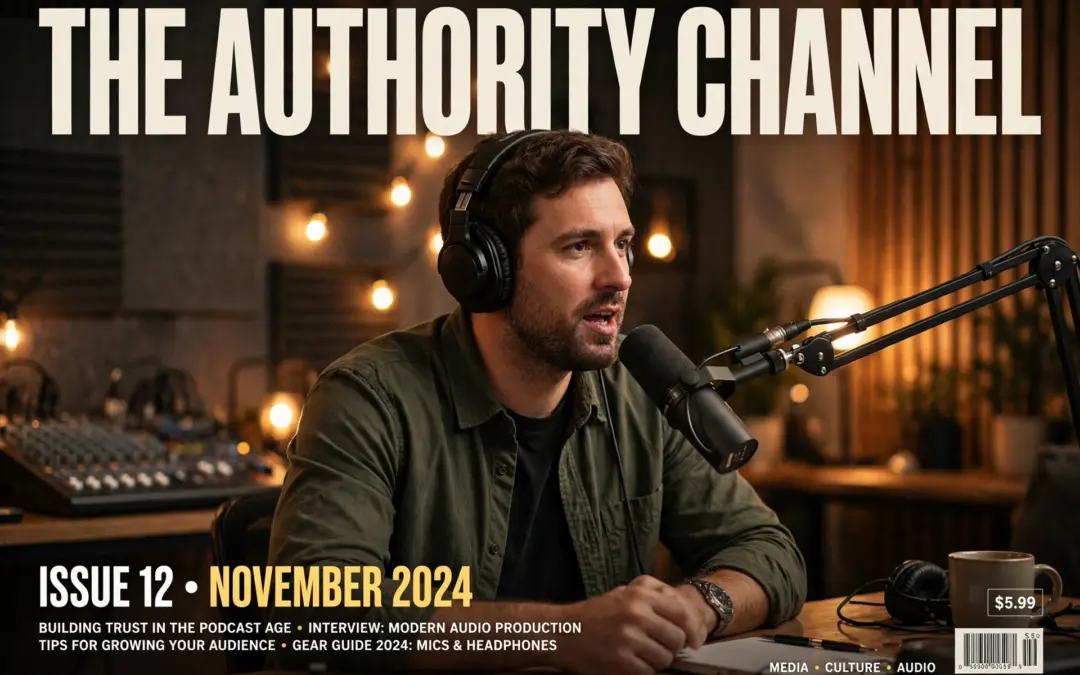
Post every day for a year and you will have 365 posts — and, for most experts, almost nothing to show for it. Each one lived for a few hours, earned a handful of likes from people who already knew you, and slid down a feed designed to forget it. Now compare that to a single forty-five-minute podcast conversation: a prospect hears your voice, your reasoning, your stories, and your judgment, uninterrupted, for longer than they’ve spent with most of their colleagues this week. One of these builds a reputation. The other rents attention by the hour.
Why Conversation Builds Trust Faster
Authority is not claimed; it’s inferred. People decide you’re an expert by watching you think — and short posts almost never show thinking. They show conclusions, hot takes, and headlines. A podcast shows the working.
- Time is the trust currency. A listener who spends 40 minutes with you has effectively had a first meeting. When they later book a call, they’re not meeting a stranger; they’re continuing a conversation. Podcast audiences consistently report strong parasocial trust in hosts — they feel they know them.
- Your voice carries proof. Tone, confidence, humor, and how you handle a hard question can’t be faked in audio the way a polished post can be ghostwritten. Buyers of expert services are buying judgment, and judgment is audible.
- The audience is already there. Edison Research‘s long-running Infinite Dial studies have documented podcast listening growing into a mainstream habit, with well over half of Americans having listened to a podcast. Your buyers are already in the apps, on commutes and walks, looking for voices worth their time.
George Bernard Shaw’s famous warning — “The single biggest problem in communication is the illusion that it has taken place” — describes most content marketing perfectly. Posting feels like communicating. A conversation actually is.
“Posts announce your expertise. Conversations demonstrate it — and only one of those gets believed.”
One Episode Compounds Into a Week of Assets
The second advantage is arithmetic. A podcast episode isn’t one piece of content; it’s raw material for everything else:
- 3–5 short video clips of the strongest moments, for every short-form platform
- 1 full article from the transcript, edited into a blog post (like the ones on this site)
- A newsletter issue built from the episode’s best idea
- A week of social posts from quotes, claims, and stories in the conversation
- A permanent search asset — episodes get found by name, topic, and guest for years, long after a feed post is archaeology
Record once, publish for a week, get discovered for years. No other format a solo operator can produce has that ratio.
Borrow Authority Before You Build It
Here’s the part most people get backwards: you don’t need your own show first. Guesting on other people’s podcasts is the fastest authority transfer in media. The host lends you their audience and, more importantly, their endorsement — being introduced as a worthy guest is third-party credibility no ad can buy.
A realistic guesting path:
- Start where you already have standing. Niche shows in your industry with modest audiences convert better than giant general shows. Fifty listeners who are all potential clients beat fifty thousand who aren’t.
- Pitch one idea, not your biography. Hosts book segments, not résumés. Offer a specific, contrarian, useful topic: “Why I tell clients to stop posting daily” outperforms “I’d love to share my journey.”
- Bring a story and a framework. One memorable story plus one nameable method makes you quotable — and gets you invited back and referred to other hosts.
- Capture everything. Every appearance becomes clips for your own channels and a logo wall for your site. Ten guest spots is a media page most of your competitors can’t match.
Then Launch Your Own Show — Cheaply
After five to ten guest appearances, you’ll know your topics, your stories, and your voice. That’s when your own show makes sense, and the tooling has never been simpler:
- Record remote interviews in studio quality with Riverside — guests just click a link.
- Edit by editing text, and cut clips automatically, with Descript.
- Host and distribute to Apple, Spotify, and everywhere else with Buzzsprout.
Keep the format boring and sustainable: one conversation a week, forty-five minutes, batched recording days. Consistency beats production value at every stage that matters.
A Realistic First 90 Days
None of this requires quitting your content calendar or buying a studio. A sane ramp looks like this:
- Days 1–30: guest sprint. List twenty niche shows in your space, pitch ten with a specific topic, record the three to five that say yes. Save every clip and link.
- Days 31–60: build the asset base. Put up a simple media page with your appearances, turn the best conversation into an article and a week of posts, and pitch the next ten shows — now with proof links, which roughly doubles your yes rate.
- Days 61–90: launch your own. By now you have topics that tested well in other people’s audiences, stories you’ve told enough times to tell well, and a small library of clips. Record a batch of four episodes before you announce anything, so the show launches with depth instead of a lonely trailer.
Ninety days from first pitch to a live show with momentum — using other people’s audiences to fund the launch with attention instead of ads.
What to Measure (and What to Ignore)
Downloads in week one will be small, and they are the wrong scoreboard anyway. For an authority play, measure what authority produces:
- Inbound mentions: “I heard you on…” in sales calls, emails, and DMs — the single most honest metric in podcasting.
- Invitations: other hosts, event organizers, and partners reaching out because of an episode.
- Asset output: clips, articles, and posts produced per episode — if one recording isn’t yielding a week of material, fix the workflow, not the show.
- Pipeline, not applause: calls booked and deals opened that trace back to an episode or a clip. Ten downloads from buyers beat ten thousand from browsers.
The Bottom Line for Experts
If your business runs on being believed — consulting, coaching, advising, selling expertise of any kind — a podcast is not a hobby channel. It’s the highest-trust medium a solo operator can own, and the only one where a single hour of work keeps producing assets and leads for years. Guest first to borrow authority, then host to compound it.
If you want the full playbook for doing this deliberately — positioning your show, getting booked, and turning episodes into clicks, clients, and product sales — it’s laid out step by step in The Podcast Click Playbook. It’s $29, and through Monday, November 30 at 11:59 PM ET, code BLKFRIDAY7 takes 40% off, bringing it to $17.40 on Gumroad: Get The Podcast Click Playbook. Your next client is probably already wearing headphones.